
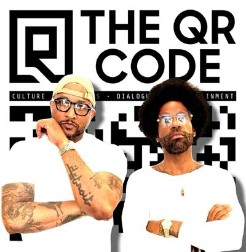
Pacifica Network’s “Sprouts” on February 11, opened with a conversation between Ramses Ja and Q Ward, hosts of “Civic Cipher” & “The QR Code” about why Black History Month matters.
That conversation provided both historical context for the celebration and an explanation of its essential significance.
Information about the history of Black History Month included in the conversation was drawn from a February 1 article written by Heather Miller, a digital content creator for Fox TV Stations’ digital platforms, titled, “Black History Month Marks 100 years of Celebrating Black Achievement.”
This radio transcript has been edited for print.
Ramses Ja
Today, we would like to talk about Black History Month. This annual celebration of Black achievement lasts through the end of February.
How did Black History Month start? Black History Month dates back to 1926 when Carter G Woodson, a founder of the Association for the Study of African American Life and History (ASALH), created Negro History Week to encourage Black Americans to become more interested in their own history and heritage. ‘I think,’ writes Heather Miller, ‘Black folks understood what they had contributed to America’s historical narrative, but no one was talking about it.’
Miller also quotes Dr. Karsonya ‘Kaye’ Wise Whitehead, ASALH President, [who] told The Associated Press in an interview last year, ‘No one was centralizing it until Dr. Carter G Woodson was in 1926.’ Woodson chose February for Negro History Week because it had the birthdays of President Abraham Lincoln and Frederick Douglass. Lincoln was born February 12, and Douglass, a former slave, did not know his exact birthday but celebrated it on February 14.
In 1976, 50 years after the first celebration, the ASALH officially shifted the designation from a week to a month and from Negro history to Black history. Now, another half century later, this [year's celebration feels] kind of special, to finally hit the 100-year mark.
Whitehead [also] stresses that Black history is not just for Black people but for all people. ‘If you’re in an environment and everybody in the environment is white, you need Black History month more than ever because you need to understand that the world, even though you’d like to believe it fits into this box, does not.’
[In comments,] I’ve been seeing a lot of hate, a lot of people pushing back. Why do we need this…blah blah? That is what this administration has whipped up. The same thing happened during Kwanzaa. After Christmas was over, people were [saying], ‘Oh, it’s a made-up holiday,’ as though every holiday isn’t a made-up holiday. But, this one is Black; and so people want to attack it, not all people, trolls to be fair, but enough people to where it’s concerning. And, if you’re an ally, you should have the context.
Black history is important because Black people have a different perspective on life and on history. If you are not a Black person in this country, if you have roots in this country, you know your ancestry. You might take that for granted. And, even if you don’t really know [your history], there’s nothing that would tell you that it would be awful. Maybe you came from a great
explorer or a king or some person on your mom’s side, going back 13 generations, had songs written about [them]. Whatever your story is, if you can trace it back that far, maybe there’s something special there.
I can trace my story back to a slave. That’s it. And, to be fair, slavery is white history. Overcoming slavery is Black history. I’m not the first person to say this, but I want to make sure that I say it here. Understanding your history, understanding what contributions you’ve made and your people have made, lets you know exactly how far you can go, exactly what’s possible. Those things are very important, certainly to a younger mind. If you don’t know your history, especially nowadays, then you think all of this is normal. You think, ‘Oh yeah, Black people are just supposed to be in jail, and Black people just commit crimes because that’s what Black people do.’ You don’t have context, and you don’t have ways of explaining things.
I certainly grew up with a lot of gaps and blind spots. I would always wonder why would I be born and have to be with the poorest people, the people that are the ones with the guns and the shooting and the drug problems and this and that and the third thing. And then, once you get into the weeds, you realize there are systems in place. There are people that have made decisions that affected these outcomes, and you start to have context. If you know what ails you or where the source of your problems is, then you can seek to fix them.
And Black History lets you know that Black people have prospered at different points in time in this country. Black people have made significant contributions here and there, not just overcoming circumstances but scientific contributions and political contributions and educational contributions. So, you don’t grow up with a small view of yourself and of your people. And, critically, the same is true for non-Black people. If I felt that way about Black people being Black, imagine what’s possible for a non-Black person to feel about Black people if all they know is what they see and they have no historical context.
Q Ward
It’s exactly as you said. History books only taught that we were captured, enslaved and then free criminals. What people have to realize is that the transatlantic slave trade, as cruel and inhumane as it was, killed people who were a part of it twice. [It] physically harmed, lynched, burned, trafficked, assaulted, all these things, but also [people were] not just taken from their
physical land but taken from all links to where they are from, [away from an answer to the] questions ‘Where are you from? What is your ethnicity?’ Our homes were taken away.
So now, as the descendants of slaves, so much of where I’m from does not exist. And I’m sure there’s an expansive and involved way to trace that back, and I’ve done some of that work; but, without chronicling our history properly, those that oppressed us, those that killed us, those that robbed us and took everything that we ever had from us, get to tell a story where all we’ve ever been is property and criminals. You wouldn’t realize that so many of your favorite things, activities, technology, tools, toys, games, cell phones, the internet, electricity, all of these things, came from the minds of brilliant Black people. We participated in the creation of this thing called life, and that needs to be acknowledged.
For Pacifica Stations, Civic Cipher & The QR Code can be found in AudioPort.
General listeners can find more information about these shows here.